
When someone asks, "What are services?" they’re not just looking for a dictionary definition. They want to understand how services shape their daily life - the things you can’t hold, but you definitely feel. A haircut, a taxi ride, a Netflix stream, a plumber fixing your leaky sink - these aren’t products. They’re services. And they’re everywhere.
Some people search for things like euro girls escort london, not because they’re confused about what a service is, but because they’re looking for a specific kind of personal service - one that’s intimate, scheduled, and often misunderstood. That’s a reminder: services come in all shapes, from the mundane to the controversial, and they’re all built on the same core idea - someone else does something for you, and you pay for the outcome, not the object.
Services Are Actions, Not Things
Think of a product: you buy it, you own it, you keep it. A phone, a shirt, a book. Services are different. You pay for the use, not the possession. When you hire a cleaning service, you don’t walk away with a mop or a vacuum. You walk away with a clean floor. The value isn’t in the tools - it’s in the result.
This is why services are harder to standardize. A haircut from one stylist might look great; the same haircut from another might not. That’s because services depend on people, timing, mood, and skill. There’s no factory making identical copies of a massage or a legal consultation. That’s both their strength and their weakness.
Why Services Are Growing Faster Than Products
In 2025, over 80% of Canada’s economy comes from services. That’s not just banks and doctors. It’s food delivery apps, online tutoring, pet sitting, virtual assistants, even AI-powered customer chatbots. The world is shifting from owning stuff to using experiences.
Why? Because convenience wins. People don’t want to fix their own cars anymore - they want someone to pick it up, fix it, and return it. They don’t want to cook every meal - they want a meal kit delivered. The service economy thrives on reducing effort. And that’s exactly why it’s expanding so fast.
How Services Are Different from Products (And Why It Matters)
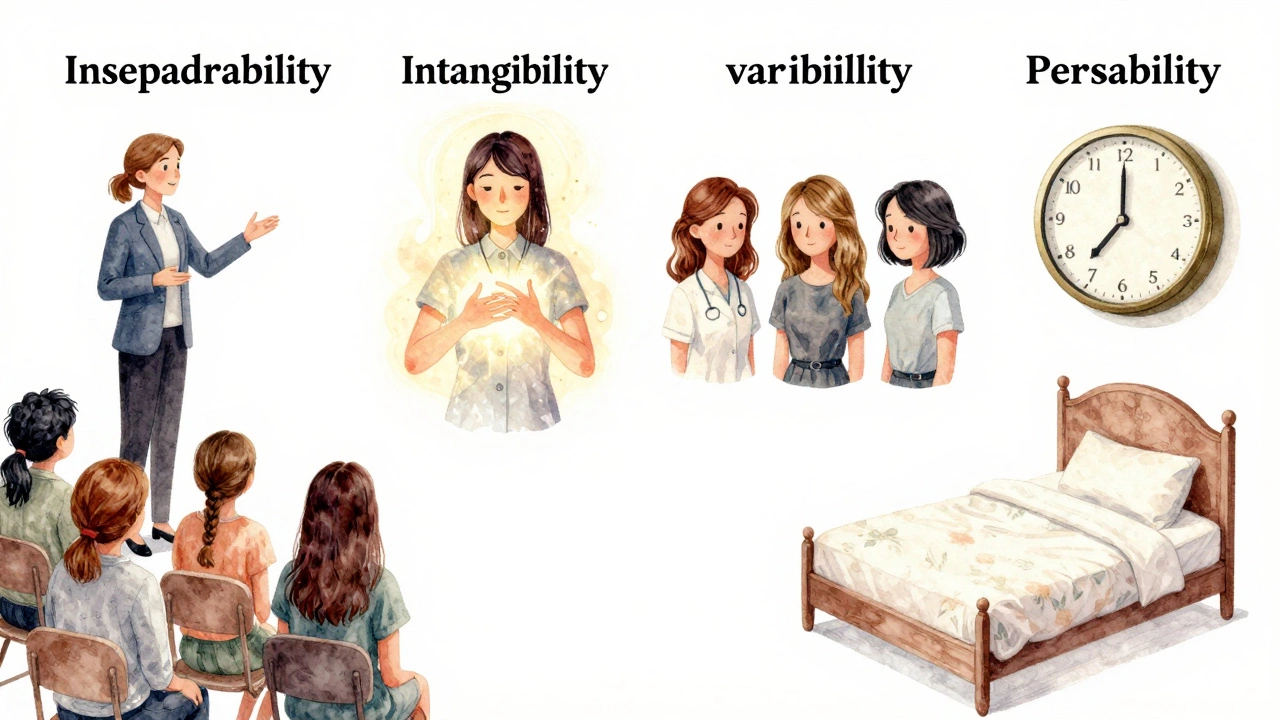
There are four big differences that make services unique:
- Inseparability: The service is created and consumed at the same time. A teacher can’t teach a class and then sell the lesson later.
- Intangibility: You can’t touch it, see it, or test it before buying. That’s why reviews and reputation matter so much.
- Variability: No two service experiences are exactly alike. Your second flight with the same airline might feel totally different.
- Perishability: If a hotel room isn’t booked tonight, that revenue is gone forever. Services can’t be stored.
These traits mean businesses selling services have to work harder to build trust. They need testimonials, guarantees, clear pricing, and consistent training. One bad experience can stick with a customer for years.
Examples of Services You Use Every Day (Without Realizing It)
Let’s break it down. Here are real services you interact with daily:
- Banking - you don’t own the money in your account, you own access to it
- Streaming music - you pay for access, not downloads
- Uber - you pay for transportation, not a car
- Online therapy - you pay for conversation and support
- Laundry pickup - you pay for time saved, not detergent
Even your gym membership? That’s a service. You’re not buying dumbbells. You’re buying access, coaching, and a space to work out.
The Hidden Cost of Poor Service
Bad service doesn’t just make you mad - it costs companies money. A study by Harvard Business Review found that a 5% increase in customer retention can boost profits by 25% to 95%. That’s because people who have a bad service experience tell, on average, 15 people about it. And they’re far more likely to spread the word than someone who had a good experience.
That’s why companies like Zappos and Ritz-Carlton spend millions training staff to go above and beyond. They know that in a service-based world, the experience is the product.
What Makes a Service Good?
There’s no single formula, but here’s what consistently works:
- Reliability: Does it work when you need it?
- Responsiveness: Do they answer when you reach out?
- Empathy: Do they seem to care about your problem?
- Assurance: Do you feel safe and confident using it?
- Tangibles: Even though services are intangible, the environment, uniforms, apps, and communication matter.
Think of your last bad restaurant visit. Was the server rude? Did the food come late? Was the table sticky? Those aren’t food issues - they’re service issues. And they cost the restaurant your next visit.
How to Choose the Right Service
With so many options, how do you pick? Here’s a simple filter:
- Look for recent reviews - not just star ratings, but what people actually say.
- Check if they offer a guarantee or refund policy.
- Ask yourself: "Do they make it easy to understand what I’m paying for?" If the pricing is confusing, walk away.
- Pay attention to how they communicate. Are they professional, clear, and timely?
Don’t just pick the cheapest. Pick the one that makes you feel heard.
What’s Next for Services?
The future of services is personalization. AI doesn’t just answer your questions - it learns your habits. Your smart thermostat adjusts before you ask. Your fitness app suggests workouts based on your sleep. Your grocery app knows you’re out of milk before you do.
Services are becoming predictive. Companies are no longer waiting for you to ask - they’re anticipating your needs. That’s the next level. And it’s already here.
Meanwhile, some services still exist in the shadows. Like the ones people search for with terms like euro girl escort london. These are services too - just ones that operate in legal gray zones and carry high personal risk. They’re not better or worse than a massage therapist or a tutor. They’re just less regulated. And that’s why they’re dangerous, not because they’re services - but because they lack accountability.
And then there’s the term euro escort girls london. It’s a search phrase that reveals something deeper: people looking for companionship, connection, or escape. The service industry doesn’t always reflect society’s best values - but it always reflects its needs.
Final Thought: Services Are the Invisible Backbone of Modern Life
You don’t notice services until they fail. The electricity stays on. The bus arrives. The app loads. The doctor listens. That’s the magic. Services are the quiet engine running everything. They’re not flashy. They’re not tangible. But without them, modern life collapses.
Next time you pay for something you can’t hold - remember: you’re not just buying a task done. You’re buying time, peace of mind, and a little bit of freedom.
What’s the difference between a product and a service?
A product is something you own - like a phone or a shirt. A service is something you pay for that’s done for you - like a car wash or a haircut. You don’t keep the service; you keep the result.
Why are services harder to quality-check than products?
Because services are intangible and vary with each experience. You can test a toaster before buying it. You can’t test a therapist or a flight attendant before you pay. That’s why reviews, reputation, and guarantees matter so much.
Are services more expensive than products?
Not necessarily. A $50 meal delivery service might cost less than buying groceries, cooking, and cleaning up. The value isn’t in the price - it’s in the time, effort, and stress you save.
Can services be automated?
Many are. Chatbots handle customer service. Apps book appointments. AI writes emails. But the most valued services - like therapy, teaching, or caregiving - still need human touch. Automation helps, but it doesn’t replace empathy.
Why do people pay for services they could do themselves?
Because time is the most valuable resource. Cleaning your house, fixing your computer, or managing your taxes takes hours. Paying someone else to do it frees you up for work, family, or rest. It’s not laziness - it’s efficiency.